
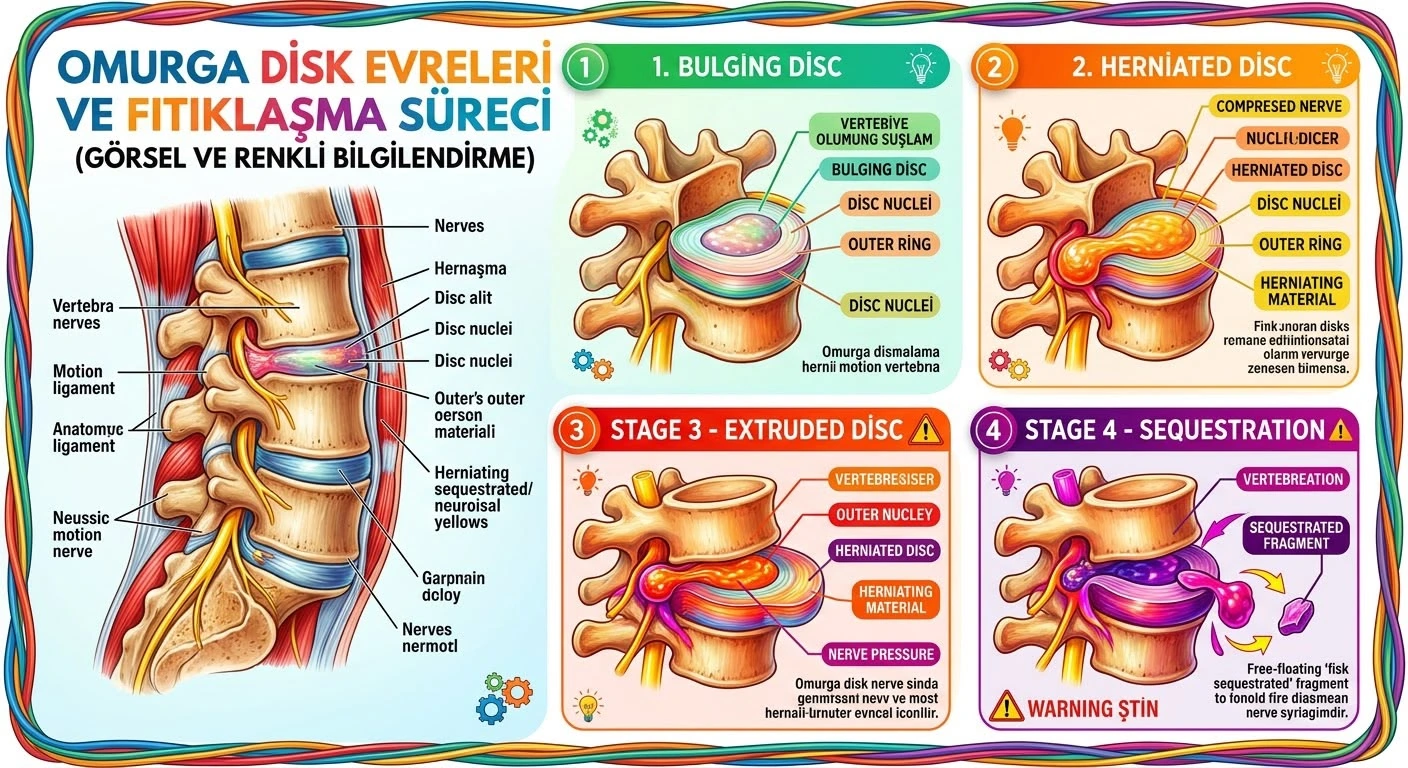
A lumbar disc herniation occurs when the firm outer layer of a disc between the lower-back vertebrae tears or weakens and the gel-like material inside extends towards the spinal canal, pressing on nerve roots. It is most often seen at L4–L5 and L5–S1.
Stages of lumbar disc herniation
The stages describe how far disc material extends and its effects on nerves.
1. Protrusion
The outer layer weakens, bulges or develops a partial fissure. The inner material extends slightly outwards. Short episodes of back pain, muscle spasm or locking may occur.
2. Prolapse
The bulge becomes more pronounced and may contact a nerve root. Pain spreading from the back to the buttock and leg (sciatica), with numbness, may begin. Marked muscle or reflex loss may not yet be present.
3. Extrusion
The outer layer tears and the gel-like material extends beyond it, potentially placing substantial pressure on a nerve. Severe leg pain, numbness in the foot or toes and muscle weakness may occur.
4. Sequestration
A fragment separates from the disc and lies free in the spinal canal. The risk of serious nerve injury increases. Marked weakness, loss of sensation, difficulty standing and loss of bladder or bowel control (cauda equina syndrome) may require emergency assessment.