
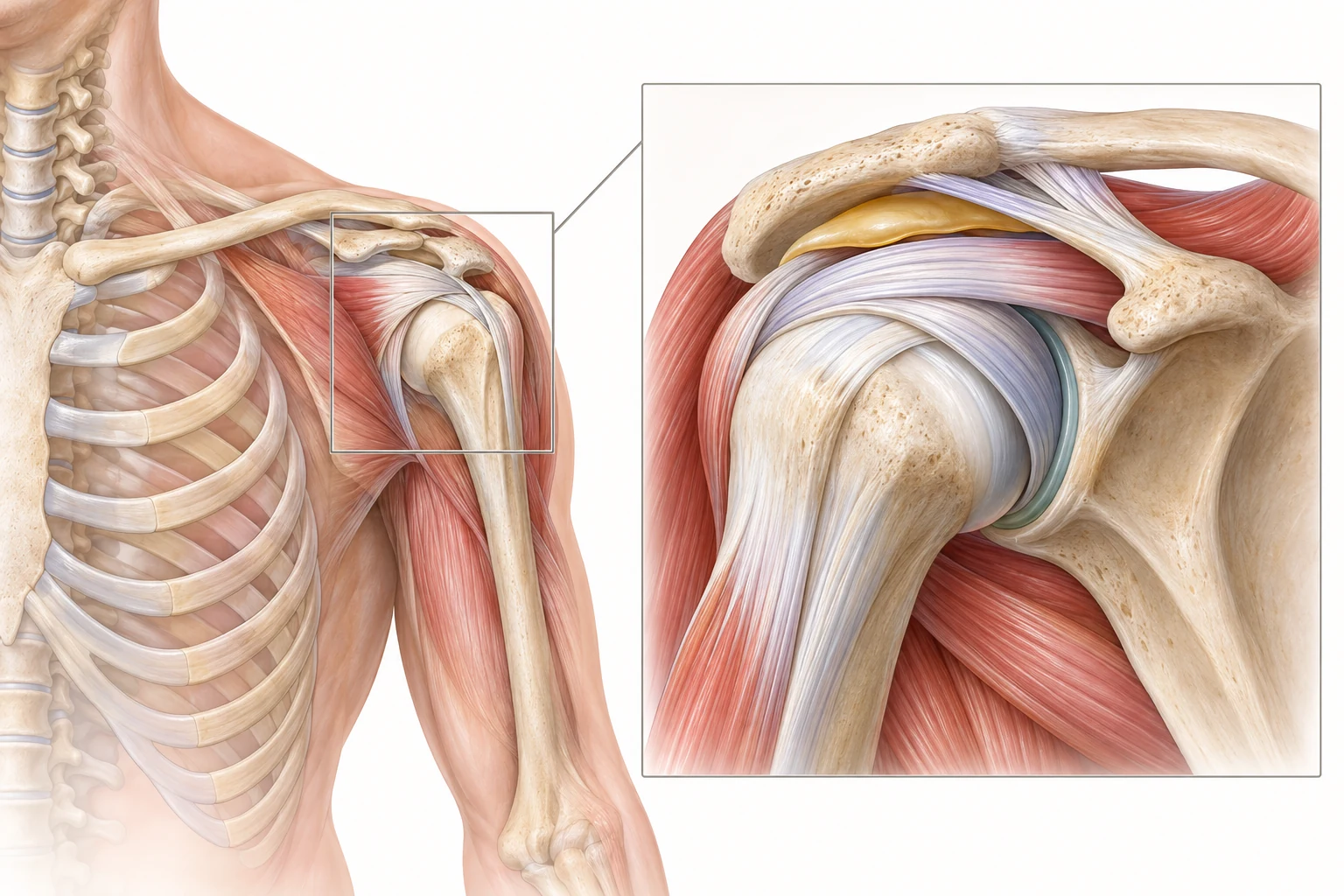
What is this condition?
Frozen shoulder involves tightening of the capsule around the shoulder joint, causing pain and marked loss of movement that may last months and sometimes years. Both active movement and movement assisted by another person can be restricted.
How it may feel
- Shoulder pain that may be worse at night
- Difficulty lifting the arm or reaching behind the back
- Restriction with dressing, grooming or reaching
- Stiffness that becomes more noticeable over time
Where and when is it felt?
Pain may feel deep in the shoulder and over the outer upper arm and can be worse at night. Over time, both active movement and movement produced by someone else become markedly restricted.
Effect on daily life
Dressing, grooming, reaching, fastening a seat belt and lying on the painful side may be difficult.
When should medical advice be sought?
Seek medical advice if you cannot lift the arm after a fall, there is deformity, a hot swollen joint with fever, new widespread numbness or rapidly worsening weakness.
Common questions
How long can frozen shoulder last?
Duration varies and can be many months; follow-up and assessment of associated conditions matter.
How to use this information
Symptoms vary from person to person. Do not use this page to diagnose yourself or choose personal treatment.
Information source: nhs.uk ↗